Choosing the Right Pickleball Paddle
Look around any pro shop or scroll through any pickleball website and you’ll quickly see just how crowded today’s pickleball paddle market has become. With dozens of brands and countless models, it’s no wonder players of all levels can feel somewhat overwhelmed.
Whether you’re brand new to the sport, a progressing intermediate, or a seasoned competitor, choosing the right paddle shouldn’t feel like decoding a science experiment. With a little understanding of the key elements that truly matter, you should be able to confidently select a paddle that supports your game today and into the future.
1. Start With Weight: Your Most Important Decision
Paddle weight has the biggest influence on how a paddle feels and performs.
- Lightweight paddles (7.0–7.6 oz) offer manoeuvrability and quick hand speed at the net. Great for beginners learning control or advanced players who rely on fast hands in the kitchen.
- Midweight paddles (7.7–8.2 oz) strike a balance between power and control, making them ideal for most players, especially intermediates who want an all-rounder.
- Heavy paddles (8.3+ oz) produce extra power and stability but may increase fatigue or wrist strain. These suit players with developed technique and strength who prioritise power.
2. Shape & Grip: Comfort Equals Performance
These are the most common paddle shapes in the market today:
Standard Widebody
- Dimensions: approximately 15.5–16" long × 7.75–8.25" wide
- Best for: All-round performance, beginners to advanced players
- Benefits: Largest sweet spot, highest forgiveness, easy control and consistency.
Elongated
- Dimensions: approximately 16.5–17" long × 7" wide
- Best for: Advanced players, singles players, players wanting reach and power
- Benefits: Extra reach, great for covering the court and more power due to longer leverage
- Trade-offs: Smaller sweet spot and requires better accuracy and timing
Hybrid
- Dimensions: In-between standard and elongated
- Best for: Players who want more reach without sacrificing too much forgiveness
- Benefits: Balanced reach and sweet-spot size, versatile for both doubles and singles
- Trade-offs: Requires more precise advanced techniques for best performance
Short Widebody
- Dimensions: Shorter length approximately 15–15.5" but wider at 8.2–8.5"
- Best for: Defensive, soft-game, and quick-hands players
- Benefits: Extremely large sweet spot, great stability and blocks at the kitchen
- Trade-offs: Slightly reduced reach
Grip Size Matters:
A grip too large restricts wrist movement; too small reduces stability and increases strain. When unsure, go slightly smaller as adding overgrips can customise the size.
Choosing the Right Size:
Most grips are around 4.0"– 4.5" inches in circumference. To test the grip size on a paddle use the index finger test: if your finger fits snugly between palm and fingers, it’s the right size.
Or measure from palm crease to ring-finger tip:
- 4.0"– 4.25" small hands
- 4.25"– 4.5" medium/large hands
- 4.5"+ very large hands
Potential Injury Risks:
- If the grip is too small: there are risks of overuse of wrist/fingers which can cause pickleball (tennis) elbow or increase muscle fatigue.
- If the grip is too large: this can overload the forearm, place limitation on wrist motion and may lead to tendonitis or hand pain.
Performance Effects of grip size:
- Smaller grip offers easier wrist action, better spin/control making it great for finesse players or smaller hands.
- Larger grip gives more stability, improved control on off-centre hits and extra power from the arm.
Remember: You can’t reduce the handle size of a paddle, however you can always add overgrips to personalise the size to suit you.
3. Paddle Thickness
- Thicker cores (14–20mm) soften the feel, reduce vibration, and greatly increase control, making them ideal for players who value resets, drops, and finesse.
- Thinner cores (11–13mm) add pop and power, suiting aggressive players or those who rely on driving the ball.
4. Know Your Paddle’s Core: Power vs. Control Starts Here
A pickleball paddle’s core remains the real foundation of performance. The core determines feel, power, vibration, and durability. While traditional cores like Polymer (poly) and Nomex are still common, the industry is now embracing foam-based cores, floating cores, and hybrid constructions.
Polymer (Polypropylene) Honeycomb
- This is still the most common core material for many paddles.
- Relatively soft compared to other honeycomb style cores, delivering good shock absorption and touch.
- Tends to be quieter than other cores.
- Drawbacks: over time, the honeycomb cells can “crush” (core crush) and lead to dead spots.
Nomex (Aramid) Honeycomb
- One of the original core materials used in pickleball paddles.
- Very rigid and offers a lot of “pop” / power.
- Loud in sound and produces more vibration.
- Still used (infrequently) in some high-power or legacy-style paddles.
Foam (Full-Foam / Hybrid Foam) Newer Generation Technology (Gen 3)
- This is where a lot of innovation is happening today. Instead of a honeycomb style core, newer paddles are using foam cores, or hybrid versions of foam combined with honeycomb. Types of foam being used include EPP (Expanded Polypropylene), EVA (Ethylene-Vinyl Acetate), and EPU (Expanded Polyurethane).
Advantages of foam cores:
- More consistent feel across the face (because there’s no fragile honeycomb structure to wear out or “crush”).
- Larger sweet spots, because foam can distribute energy more uniformly.
- Higher durability (resists “core crush” issues).
Hybrid Cores / Gen-3 Floating Core
- Some “Gen 3” paddles use a hybrid design of traditional honeycomb (usually polymer) plus foam injected around or into the core to improve stability and feel.
- The foam can act as a stabilizer and dampener, improving off-centre hits and sweet spot consistency.
Why This Matters for Players
- Power vs. Control: Rigid cores give more power and pop, but foam or polymer cores tend to offer more control / touch.
- Durability: Foam cores (especially in newer “full foam” paddles) are more resistant to degradation like core crush.
- Noise: Polymer and foam cores are generally quieter than Nomex.
- Feel / Feedback: Foam cores often give a more “plush” feel, while hybrid polymer/Nomex cores feel stiffer and more responsive.
How These Innovations Can Help Your Game
- Beginners: Foam-core paddles offer a softer, more forgiving feel, making it easier to learn dinks, resets, and placement without being punished for imperfect hits.
- Intermediate Players: With hybrid or foam cores, you’ll benefit from a larger sweet spot and better consistency, letting you fine-tune your balance of power and control as your game evolves.
- Advanced/Competitive Players: Full-foam or foam-hybrid paddles give you a more connected feel, great dwell time (ball stays on the paddle longer), and refined vibration dampening. These features support spin-heavy shots, precision drives, and extended match play without wearing your arm out.
5. Surface Material Does Matter, but Not as Much as You Think
For beginners, surface material is less important than finding a paddle that feels comfortable. For intermediates and advanced players, focus on whether you want more spin/control or more pop/power.
Carbon fibre, raw carbon, Kevlar, fibreglass, graphite, thermoformed, unibody… the terminology is endless. Here’s a simple breakdown:
- Advanced Carbon / Raw Carbon Fiber Surfaces: emphasises control, spin, and consistency.
- Blending carbon fiber + Kevlar or other fibers: Kevlar-carbon hybrids, offer a more vibration dampening feel while keeping the power and rigidity of carbon.
- Diamond infusion: patent pending tech that embeds diamond like particles in the surface for surface grit longevity.
- Graphene / high-modulus fibers: Some emerging paddles are experimenting with graphene-enhanced resins to make very light, stiff, yet strong faces.
- Fibreglass: delivers higher power and pop.
- Graphite: provides a crisp, controlled touch.
6. ALWAYS Test Before You Invest
No marketing claim can replace real-world feel. Borrow paddles from friends, join demo days, or test paddles at tournaments. Pay particular attention to how a paddle performs in your hands, not how it’s advertised in the marketing hype.
In a crowded paddle marketplace filled with bold claims, the smartest choice is the one that matches your playing style, physical comfort, and current skill level. Understanding the essentials, paddle weight, core, surface, shape, and grip empowers you to cut through the noise and select a paddle that elevates your game during your very next time on court.
For a comprehensive overview on selecting a paddle, take a look at this great video from an independent reviewer Matt’s Pickleball.
To add this web app to your homescreen, click on the "Share" icon

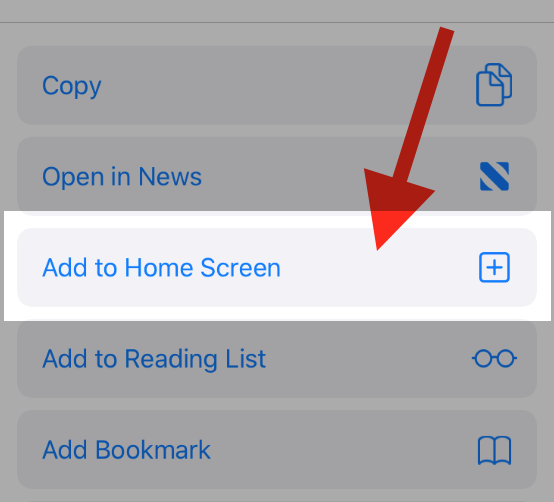
Then click on "Add to Home"
To add this web app to your homescreen, click on the "Share" icon
Then click on "Add to Home"
It looks like your browser doesn't natively support "Add To Homescreen", or you have disabled it (or maybe you have already added this web app to your applications?)
In any case, please check your browser options and information, thanks!
It looks like your browser doesn't natively support "Add To Homescreen", or you have disabled it (or maybe you have already added this web app to your applications?)
In any case, please check your browser options and information, thanks!